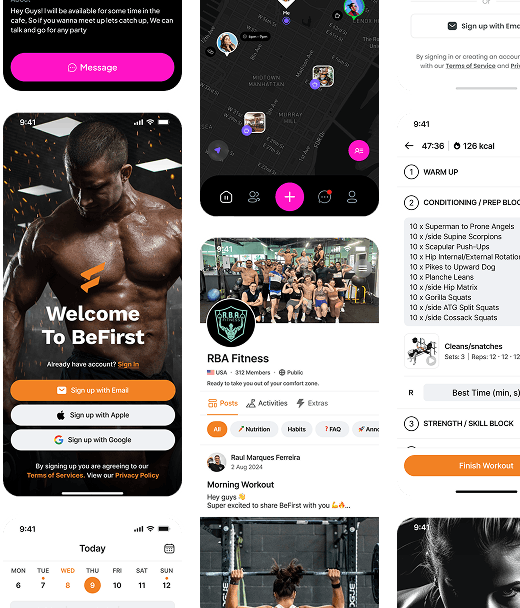
Vibe coding speeds up ideas—but it doesn’t replace MVPs. See how Dewais turns AI-built demos into launch-ready products with the right mix of low-code and engineering.
Is Vibe Coding Killing MVP?
If you’ve scrolled LinkedIn lately, you’ve probably seen hot takes declaring that AI-assisted “vibe coding” makes MVPs obsolete. The logic is tempting: why spend weeks (and your budget) building a minimum viable product when you can prompt an AI, spin up a UI, and ship something in an afternoon?
Here’s the reality: vibe coding isn’t killing MVPs.
Vibe coding is reshaping the earliest phase of product discovery. It lowers the cost of experimentation. However, getting it right still depends on connecting those early builds to structured prototyping and real engineering.
So, let’s break down if vibe coding is actually a threat or is your new best friend.
Long live the MVP.
How vibe coding is changing MVPs builds.
Vibe coding is the new starting point of MVPs. By prompting AI tools, founders and product teams can generate usable screens, clickable flows, and even bits of backend logic with astonishing speed. While that’s useful, it doesn’t erase the need for a build that can stand in front of investors, support users, or evolve into a long-term product.
Accelerating teams at the start of their MVP journey, vibe coding reduces the need for a five-figure MVP budget to just $20 and a weekend. Then, once those experiments indicate potential, teams will make their way back to structured MVP development.
Vibe Coding vs. Prototyping vs. MVP
What vibe coding really means, and how it differs from prototypes and MVPs.
In the rush to get products off the ground, these terms might blur together. A startup founder might call an AI-generated demo an “MVP.” A product manager might label a clickable Figma flow a “prototype,” while an investor expects a real product behind the word “launch.” Confusing these words is more harmful than just semantics — it leads to mismatched expectations, wasted resources, and failed projects.
Smarter builds start with treating vibe coding, prototyping, and MVP development as distinct phases. Each has a clear purpose, and knowing which stage you’re actually in makes all the difference:
- Vibe Coding → Prompt-driven building with AI copilots, tools like Cursor, or low/no-code platforms boosted by AI. It’s about speed to something that looks and feels like software, without the burden of stability or scalability.
- Prototype → Speed to insight. Clickable UX, feasibility checks, and team alignment — a way to test assumptions and validate ideas before committing to code that needs to last.
- MVP (Minimum Viable Product) → Speed to market. A working product tested with real users, handling real data, and built with enough reliability, security, and support to survive beyond a demo.
What Vibe Coding Does Exceptionally Well
AI coding tools accelerate rapid prototyping, validation, and idea testing.
Vibe coding has obvious appeal, and it’s not hard to see why organizations are flocking to it. When you can prompt an AI and watch an interface appear in minutes, it feels almost magical. Beyond the “wow” factor, there are a few practical strengths worth noting:
- Momentum & Morale
Founders talk about “feeling alive” when their idea turns into a working screen in hours instead of months. That energy is contagious; motivating teams and keeping investors engaged. - Stakeholder Alignment
It’s easier to debate features when there’s something clickable in front of you. Early mockups generated through AI help teams decide faster and reduce abstract back-and-forth conversations. - Cheap Invalidation
Ten years ago, testing an idea often meant spending $20,000 on a basic MVP that might never get traction. Now, low-cost AI tools can save investors from pursuing a dead end. - Faster Front-End Starts
With tools that convert Figma designs into code, teams can accelerate the UI stage. It gives a tangible sense of “how the product might look and feel,” even if the backend remains a blank canvas.
Where Vibe Coding Hits the Wall
You can vibe code a demo. You can’t vibe code reliability.
The flip side of vibe coding’s speed is its fragility. Once teams try to move beyond a demo or clickable mockup, reality sets in. This doesn’t make vibe coding useless, however. It simply defines its boundaries. Think of it as the pre-game warmup, not the actual match.
- Backend and Infrastructure Limits
Authentication, user roles, data models, integrations with third-party APIs, observability, performance, privacy — these are not things you can reliably “vibe” into existence. They require architecture and engineering. - The Complexity Tax
The time you save writing code is quickly consumed by higher-order problems: requirements gathering, UX design, prioritizing features. AI can generate snippets, but it can’t decide what matters most to users or investors. - Investor Timelines
Many teams promise, “We’ll have a demo in six weeks.” AI can help them mock something up, but when that demo needs to be robust enough for investor scrutiny, toy code almost always falls apart. - The Trash-Can Effect
A huge percentage of vibe-coded projects are abandoned. That’s fine if they were only meant as experiments, but costly if teams mistake them for true MVPs. Throwing away vibe builds often means paying to start over.
The Moment of Truth: Is Vibe Coding Actually Killing MVP?
The bigger question isn’t whether vibe coding can produce usable software — it can. The real question is whether it changes the need for MVPs altogether. If AI can generate a demo in a weekend, do teams still need to invest in a minimum viable product?
Current market signals point to a shift in early-stage work. Projects now arrive with lower upfront costs, smaller budgets, and a different kind of scope for agencies and engineering partners.
- Fewer Low-Stakes MVPs
Teams that once would have hired out a small MVP project are now experimenting on their own. That means fewer bottom-of-the-market MVP contracts. - Smaller Initial Budgets
Because teams can more affordably test with AI tools, the money they allocate to a first build is often lower. Instead of coming to agencies with $50K, they come with $10K and a prototype they’ve already toyed with. - More “Make It Real” Projects
Increasingly, organizations arrive saying, “We vibe coded this ourselves — now we need someone to make it production-ready.” That’s a different kind of work: less exploration, more transformation.
Answer: vibe coding isn’t killing MVPs. It’s reducing the number of low-value MVP builds — the kind that used to eat budgets and die in obscurity — and increasing the number of qualified projects. When teams come back after experimenting, they usually return with clearer scope, stronger conviction, and higher odds of success.
In other words, the MVP is not dead. It’s evolving!
To Vibe or Not to Vibe
Vital information for knowing when to move on from AI prototyping to engineering MVPs.
Like many new tools, vibe coding works best when you know where it shines and where it breaks down. Used thoughtfully, it can help teams move faster and save money. Used carelessly, it can create technical debt and miss investor deadlines.
Example Use Cases for Vibe Coding and AI Prototyping
- New UX Flows: When you want to visualize how users might move through a product.
- Pitch Demos: Quick, polished screens for investor decks or customer conversations.
- Simple Utilities: Internal tools or small functions where scale doesn’t matter yet.
- Team Alignment Exercises: Mockups that get everyone on the same page before committing to real builds.
When to Move Beyond Vibe Coding and Build an MVP
- You’re handling user data — especially sensitive information like payments, PII, or PHI.
- Traffic or adoption is climbing, and you need performance, stability, or SLAs.
- Multiple systems or APIs must work together in one coherent product.
- Investor milestones are looming, and toy code won’t survive demo day.
The rule of thumb: vibe coding is for exploration. Engineering is for execution.
Our Process: Vibe → Prototype → MVP
How Dewais turns AI builds into structured prototypes and production-ready MVPs.
At Dewais, we see vibe coding as a useful first step rather than an alternative solution. The key is knowing when to stop vibing and when to start building. We recommend a simple three-step progression:
- Vibe Coding:
Use AI-assisted tools to quickly capture intent, flows, and constraints. This phase is about speed — turning an idea into something tangible, even if it’s rough. - Structured Prototype:
Take the raw idea and shape it into a clear, testable model. Here, we cut down to the must-ship path, validate assumptions, and choose the right stack — whether that’s Bubble, Retool, Lovable, or a mix with custom components. - Engineering MVP:
Turn the prototype into a product ready for real users. This is where scalability, security, data management, integrations, and long-term support come in.
Tools That Turn Vibe Builds Into MVPs
How we turn AI-generated sketches into usable products with Bubble, Retool, Lovable, and custom stacks.
Vibe coding often starts with whatever AI tool is easiest at hand… but as we’ve been saying, those tools rarely survive contact with real-world product needs. To bridge the gap, we rely on a mix of proven low-code platforms and custom engineering. Each tool plays a role in helping us take a vibe-coded sketch and shape it into something that can launch, scale, and grow.
- Bubble / Lovable → Perfect for spinning up UI quickly and testing how a product feels. They’re often where vibe-coded ideas first gain real usability. But on their own, they’re rarely enough for complex backends or integrations.
- Retool → Ideal for internal dashboards and admin tools that keep early operations running. Vibe coding won’t get you a reliable admin console — but Retool can deliver one in days, not months.
- Custom stack → The foundation when a product needs scalability, advanced data handling, or unique business logic. This is the stage where vibe coding’s limits show most clearly, and where engineering is non-negotiable.
The Real-World Payoff of Vibe Coding
How founders, product teams, and investors benefit when vibe coding evolves into structured builds.
When you treat vibe coding as a starting point, and pair it with prototyping discipline and real engineering, the results are faster, more strategic, beneficial for everyone:
For Founders: Fewer false starts
Cheap invalidation means you don’t burn $20K on an MVP that never gets traction. Instead, you test quickly, kill bad ideas early, and keep the runway for the concepts that deserve it.
For Product Managers: Tangible progress
Weekly updates aren’t just “we generated more code.” They’re clickable prototypes, validated flows, and production-ready features that PMs can show to stakeholders with confidence.
For Investors & Boards: Better signals
Structured prototypes and engineering deliver clear milestones. It’s easier to see what’s real, what’s risk, and whether a startup is moving toward market fit.
For CTOs & Tech Leads: Cleaner handoff
Instead of inheriting fragile AI-generated code, engineering teams get structured specs, a prioritized backlog, and a clear path to scale. That means less rework, fewer headaches, and a faster route to stability.
For Everyone: Budget reality
Some MVPs can and should cost less now, thanks to AI and low-code acceleration. But when a product is meant to scale and handle user data, payments, or investor deadlines, engineering remains non-negotiable.
Conclusion: Vibe Coding Didn’t Kill the MVP. It Killed Waste.
Vibe coding is the new pre-prototype.
Despite the headlines, MVPs aren’t dead — they’re evolving. The rise of vibe coding means fewer founders are wasting tens of thousands on ideas that never deserved an MVP in the first place. That’s good news: it makes early exploration cheaper, faster, and less risky.
But vibe coding isn’t enough on its own. The teams who succeed are the ones who:
- Use vibe coding to experiment and learn quickly.
- Build structured prototypes to clarify scope and align teams.
- Invest in MVPs to launch products that can handle users, data, and scale.
The new reality is vibe coding kills waste. For startups, PMs, and investors, that shift creates a healthier path from idea to insight to launch.
At Dewais, we see ourselves as partners in that transition. We’re built for the graduation phase — when vibe-coded ideas need to become real products. And yes, we’re happy to vibe alongside you before carrying the baton across the finish line.

Related Articles